
GLOBAL SITE

Asia
Europe
America
Africa
Oceania
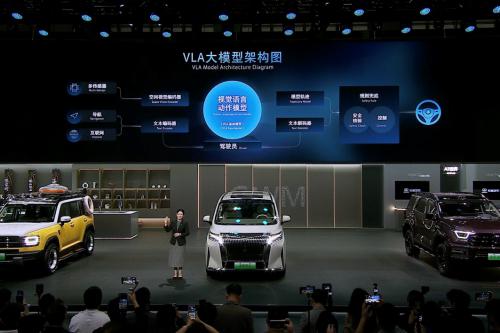
GWM Secures Exclusive Partnership with Leading Global Robotics Conference, Bringing Real-World Driving Challenges to the World Model Debate
While the industry is still debating whether world models are realistic enough visually, GWM is already bringing real-world challenges from mass-production vehicles to one of the world’s leading academic platforms for robot learning.
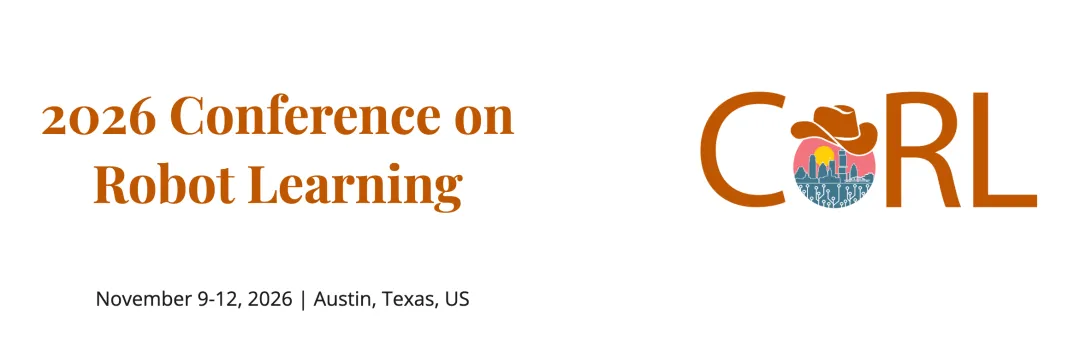
GWM has recently become the exclusive senior partner of CoRL 2026 Workshop. Scheduled for November 2026 at the JW Marriott in Austin, Texas, the Conference on Robot Learning (CoRL) is a major international gathering for the robotics learning community. At the “Grounded 4D Multimodal World Models for Autonomous Driving Decision Making” Workshop, GWM will engage in in-depth discussions with leading researchers from around the world, working together to advance world models for autonomous driving from simply “generating” realistic environments to actually “making decisions.”
Why CoRL Matters: This Is Far More Than a Conference Appearance
For those unfamiliar with CoRL, the Conference on Robot Learning is widely recognized as an influential international academic conference in robot learning. It brings together leading researchers from universities, research institutions and technology companies including MIT, Stanford, Carnegie Mellon University, Google DeepMind and Meta, making it an important platform for emerging research at the intersection of robot learning, embodied intelligence and advanced driver assistance.
Against this backdrop, GWM’s role as the exclusive partner of a core Workshop is particularly significant. Historically, such in-depth partnerships have largely involved major international technology companies and leading academic institutions. For an automaker to take on an exclusive partnership role and help shape a core research discussion is highly unusual.
This is not a symbolic appearance. GWM is bringing the real challenges encountered in the mass-production development of intelligent driving in China directly to the global academic stage, creating an opportunity to engage with researchers at the frontier of the field.
From “Better Visuals” to “Better Decisions”: Putting World Models to the Test
The central theme of the Workshop addresses one of the key challenges facing world models today: their value ultimately lies not in visual effects, but in helping vehicles make better decisions.
So, what exactly is a world model? One way to think of it is as a large-scale virtual training ground for driving. It needs to reproduce not only roads, vehicles and pedestrians, but also dynamic changes under rain, snow and nighttime conditions, as well as complex situations such as sudden cut-ins and pedestrians crossing unexpectedly. The goal is to expose intelligent driving systems to a broad range of challenging scenarios before they encounter them on real roads.
For some time, however, the industry has placed heavy emphasis on visual realism—competing over whose generated images are sharper, more detailed and more convincing. But for driving, visual realism alone is not enough. If a model cannot translate what it perceives into accurate and safe driving decisions, visual sophistication has little value in real-world deployment.
That is precisely where the Workshop’s focus comes in: moving world models beyond the ability to “generate” toward the ability to “decide.” Instead of focusing primarily on impressive visual output, the research agenda puts greater emphasis on the actual improvement of intelligent driving, with planning and control performance serving as the ultimate test.
The objective is straightforward: reduce collisions and traffic violations while enabling vehicles to respond more safely and confidently to rare but potentially dangerous situations.
From the perspective of everyday drivers, this is far from an abstract academic concept. It points toward intelligent driving systems that can better understand complex road conditions, anticipate potential risks and respond more appropriately in rain, at night and when unexpected situations arise.
Why GWM? The Value of Industry-Academia Collaboration Lies in Real Problems
Frontier academic research needs to be grounded in real-world industrial challenges. One of the reasons GWM is a valuable partner for this research is that it is not coming to the table simply to showcase technology. It is bringing problems that have emerged through the development and deployment of mass-production intelligent driving systems. Real-world development presents challenges that may never appear in a laboratory alone—from 4D occupancy perception and VLA pre-training to planning and decision-making in complex scenarios and comprehensive safety evaluation. These challenges, accumulated through extensive real-world driving experience, provide the kind of practical input that academic research needs to advance.
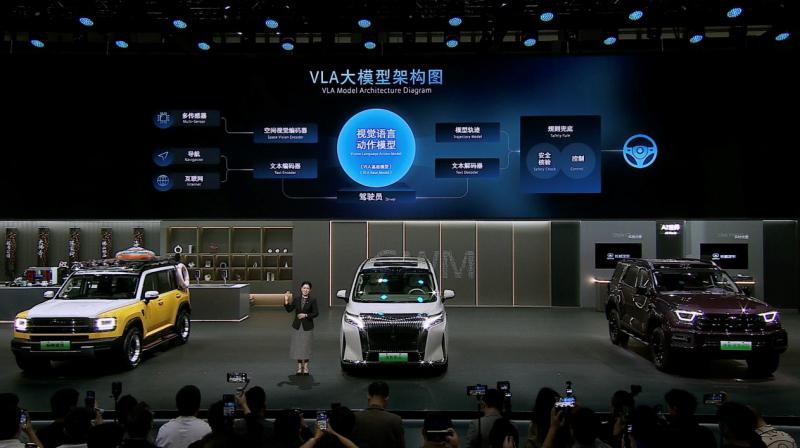
At the same time, CoRL provides GWM with a global academic platform to demonstrate the depth of China’s intelligent driving technology. GWM is not simply following developments at the frontier; it is also bringing real-world problems to the table and contributing to the discussion of where the technology should go next.
For GWM, CoRL 2026 is only a starting point. The company aims to use this platform to build a bridge between leading researchers and emerging talent around the world—bringing ideas from the laboratory into contact with real-world driving challenges, and bringing researchers from different countries together to explore the same fundamental question: What kind of technology can make intelligent driving genuinely safer, more reliable and more ready for the real world?


